The Mathura School of Art is a major ancient Indian art tradition. It flourished between the 1st century BCE and the 4th century CE. Mathura was the center of this school. It played a decisive role in the evolution of religious sculpture in India. This included Buddhist, Jain, and Brahmanical art.
Unlike foreign-influenced traditions, the Mathura school developed an indigenous artistic expression, rooted in Indian religious philosophy and local artistic traditions. Its sculptures are known for their robust physicality. They exhibit spiritual vitality and use red sandstone. These features make them distinct and easily identifiable.
Historical Background of Mathura School of Art
Mathura was an important political, economic, and religious centre in ancient India. It flourished under several dynasties such as the Shungas, Kushans, and early Guptas.
The real artistic bloom occurred during the reign of the Kanishka, whose patronage encouraged large-scale production of religious icons. Mathura also stood at the crossroads of major trade routes, facilitating cultural exchange while retaining its indigenous character.
Material Used: Red Sandstone
A defining feature of the Mathura School is the use of locally available spotted red sandstone from the Mathura region.
Importance of Red Sandstone
- Durable and easy to carve
- Gave sculptures a warm, earthy tone
- Helped create voluminous and polished figures
This material choice strongly differentiates Mathura sculptures from the grey schist used in Gandhara art.
Salient Features of Mathura School of Art
1. Indigenous Style
The Mathura school reflects Indian cultural ethos rather than Greco-Roman influence. Figures appear natural, powerful, and spiritually charged.
2. Realistic and Robust Figures
- Broad shoulders and heavy torsos
- Well-developed musculature
- Strong physical presence
3. Spiritual Expression
Faces are calm, serene, and meditative, reflecting inner spirituality rather than emotional drama.
4. Simplified Drapery
Garments are thin and clingy, often shown through simple incised lines, revealing the body beneath.
5. Halo and Iconographic Symbols
Figures often feature:
- Ushnisha
- Urna
- Prabhamandala (halo)
Buddhist Art in Mathura School


One of the greatest contributions of the Mathura School is the first anthropomorphic representation of the Buddha.
Key Characteristics of Mathura Buddha Images
- Standing or seated in Padmasana
- Right hand often in Abhaya Mudra
- Heavy body with spiritual calm
- Minimal ornamentation
Unlike Gandhara Buddhas, Mathura Buddhas appear more Indian and less classical, emphasizing spiritual symbolism over physical realism.
Jain Art in Mathura School

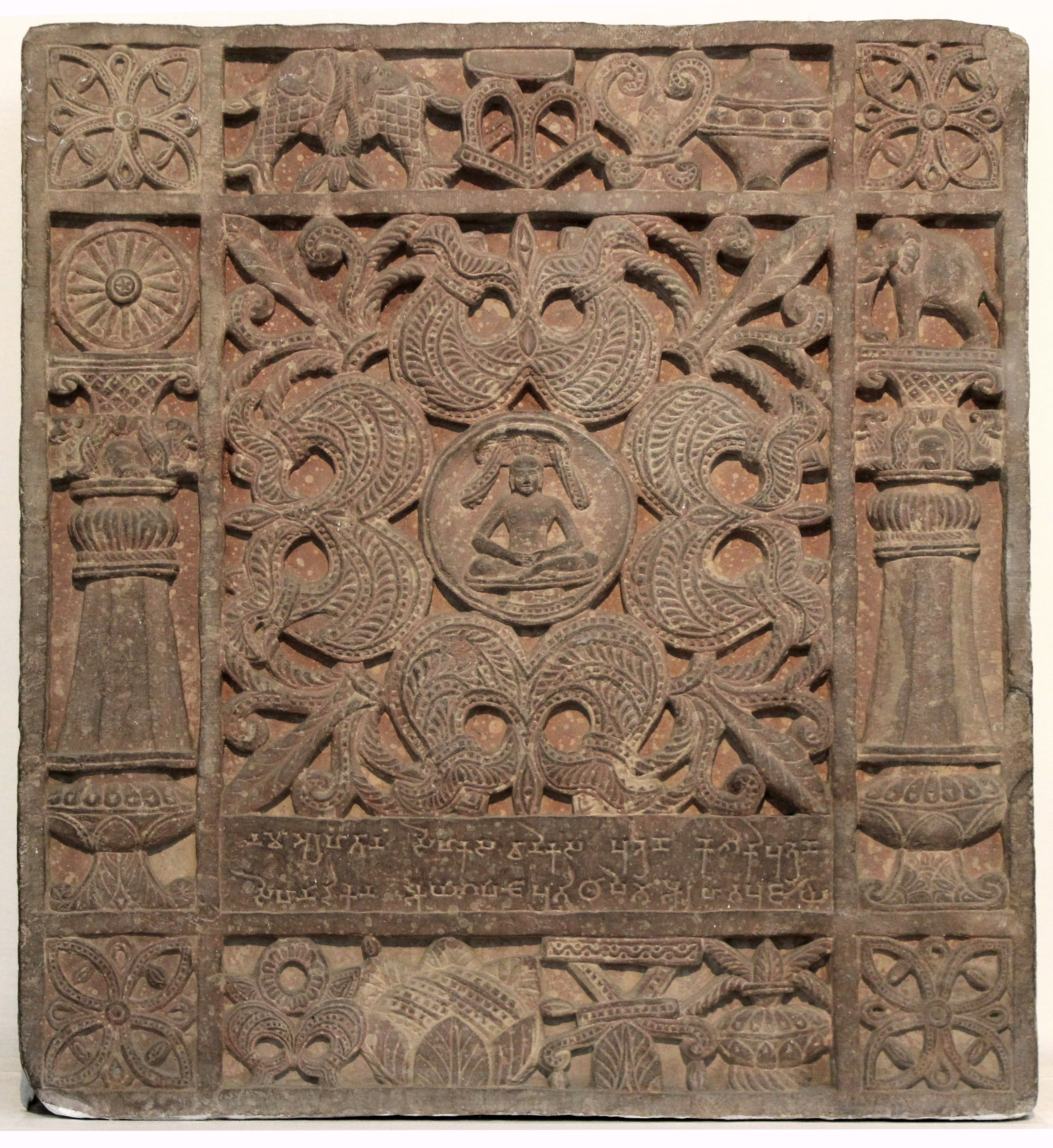
Mathura was also a major centre for Jain sculpture, especially from Kankali Tila.
Major Jain Contributions
- Tirthankara images
- Ayagapatas (votive tablets)
- Stupa-related reliefs
Jain figures are shown in strict meditative postures, symbolizing renunciation and spiritual discipline.
Brahmanical (Hindu) Art and Royal Images

Mathura artists also produced Brahmanical and royal sculptures.
Notable Works
- Yaksha and Yakshi figures (fertility deities)
- Images of Vishnu, Shiva, and other deities
- The famous Headless Statue of Kanishka, symbolizing royal authority and imperial power
These sculptures highlight the pluralistic nature of Mathura art.
Mathura School vs Gandhara School
| Aspect | Mathura School | Gandhara School |
|---|---|---|
| Material | Red sandstone | Grey schist |
| Influence | Indigenous Indian | Greco-Roman |
| Body Form | Robust, fleshy | Slim, naturalistic |
| Drapery | Light, simple | Deep folds |
| Expression | Spiritual calm | Classical realism |
Significance of Mathura School of Art
- Laid the foundation for icon worship in India
- Contributed to Buddhist, Jain, and Hindu iconography
- Influenced Gupta art, considered the classical peak of Indian sculpture
- Reflected India’s religious tolerance and artistic synthesis
Conclusion
The Mathura School of Art stands as a milestone in Indian art history. Its sculptures are not merely artistic creations but spiritual embodiments of Indian philosophy. By giving physical form to abstract religious ideals, Mathura artists transformed Indian worship practices. They left a lasting legacy that shaped centuries of artistic tradition.
Mathura School of Art, Mathura art features, Mathura School UPSC, Buddhist sculpture Mathura, Jain art Mathura, Indian sculpture ancient period, Mathura vs Gandhara Art
FAQs
The Mathura School of Art is an ancient Indian sculptural tradition that developed in Mathura between the 1st century BCE and 4th century CE, known for its indigenous style and red sandstone sculptures.
The Mathura School primarily used spotted red sandstone, sourced locally.
The school flourished mainly under Kushan rulers, especially Emperor Kanishka.
Mathura art includes Buddhist, Jain, and Brahmanical (Hindu) themes.
It played a key role in the development of iconic religious imagery and influenced later Indian art, especially Gupta sculpture.
Share this Article with your friends :
Discover more from Srishti IAS
Subscribe to get the latest posts sent to your email.